Last Updated: October 28, 2026
Quick Summary
Charleston real estate can be a good investment, but the answer depends on the specific property rather than city-wide price trends. Metro median prices rose from about $301,000 in 2020 to roughly $425,000 in 2025, yet rent and expenses determine whether a rental pays its own bills.
- Projections put 2026 appreciation at 2 to 3 percent, which is a forecast rather than a guarantee.
- A sample rental at the median price produced negative cash flow of about $1,001 per month with 20% down.
- Short-term rentals need conservative occupancy estimates and verification of current local permit rules.
- Coastal properties require quotes for hazard, wind and flood insurance before you remove your inspection contingency.
- Investment property is assessed at 6% versus 4% for primary residences, so expect a higher tax bill.
Table of Contents
- Is Charleston Real Estate a Good Investment for Your Goals?
- Charleston Home Market Trends 2026: Prices, Appreciation and Outlook
- Rental Demand, Long-Term Income and Cash Flow Reality
- Short-Term Rental Regulations in Charleston, SC: What Investors Must Check
- Best Neighborhoods for Rental Properties in Charleston
- Insurance, Flood Exposure, Financing and Ownership Costs
- Planning Your First Charleston Investment With The Mills Team
- Frequently Asked Questions
Is Charleston Real Estate a Good Investment for Your Goals?
Charleston real estate can be a good investment, but it works best for buyers who run the numbers on a specific property rather than relying on city-wide headlines. The Charleston metro median home price was reported at approximately $425,000 in 2025, up from $301,000 in 2020, according to Southern Bell Living’s 2025 Charleston neighborhood guide. Appreciation like that is attractive, but it does not tell you whether a given rental will pay its own bills.
The question most investors face is whether a specific property can make money, and how. This article covers prices, rental demand, short-term rental rules, neighborhoods, and ownership costs that can affect the outcome. Use these factors to decide whether Charleston fits your strategy.
Charleston Home Market Trends 2026: Prices, Appreciation and Outlook
Charleston’s market has climbed fast over the last several years, but the pace is expected to cool. Economists are reported to project 2 to 3 percent appreciation in 2026, according to Southern Bell Living’s market outlook. That is a projection, not a guarantee, and it should be treated as one.
A separate local analysis reports 127.74 percent appreciation over the prior decade, an average of 8.58 percent per year, according to Matt O’Neill Real Estate’s Charleston investment analysis. The exact start and end dates of that calculation are not clear, so use it as a directional signal only.
Local agents also describe the housing market as tight, with limited supply pushing up competition, as noted by Lima One Capital’s Charleston rental property guide. Tight supply supports prices, but it also raises your purchase cost. Paying more upfront makes the rent-to-price math harder.
Rental Demand, Long-Term Income and Cash Flow Reality
Strong rental demand is the main reason investors look at Charleston. Demand supports occupancy, but occupancy alone does not produce profit. Your cash flow depends on rent, vacancy, taxes, insurance, maintenance, and financing. To assess a property realistically, you need to model these costs explicitly rather than rely on broad market claims.
A property-level investment calculator can help evaluate a rental. Replace illustrative figures with actual figures from your own research and lender quotes.
Sample Investment Calculator: Long-Term Rental
Assume a single-family home priced at $425,000 (the approximate metro median in 2025). You plan a 20% down payment and finance the rest with a 30-year fixed-rate investor loan. Use the following steps:
- Purchase costs: Down payment ($85,000) plus closing costs (typically 2-5% of loan amount; assume 3% = $10,200). Total cash needed: $95,200.
- Monthly rent: Estimate from current listings in the target neighborhood. Assume $2,400 per month.
- Operating expenses (annual):
- Property taxes: Charleston County effective rate is roughly 0.5-0.6% of assessed value for investment property (assessment ratio 6%). Assume $2,550 per year.
- Insurance: Landlord policy plus wind/flood coverage can run $3,000-$6,000 per year in coastal areas. Assume $4,500.
- Property management: 8-10% of collected rent. Assume 9% = $2,592 per year.
- Maintenance and repairs: 5-10% of rent. Assume 8% = $2,304 per year.
- Vacancy allowance: 5-8% of gross rent. Assume 6% = $1,728 per year.
- HOA (if applicable): $0 for this example.
- Total operating expenses: $13,674 per year.
- Net operating income (NOI): Gross rent ($28,800) minus operating expenses ($13,674) = $15,126 per year.
- Debt service: Loan amount $340,000 at 7% interest, 30-year fixed. Monthly principal and interest = $2,262. Annual debt service = $27,144.
- Cash flow before taxes: NOI ($15,126) minus debt service ($27,144) = negative $12,018 per year (negative $1,001 per month).
This example shows that at current prices and rates, many Charleston properties do not produce positive cash flow with 20% down. Investors often need to put more cash down, find a property below median price, or accept lower returns initially and rely on appreciation.
Short-Term and Vacation Rental Potential
Short-term rentals can earn more per night than long-term leases, but they cost more to run and carry more regulatory risk. Charleston draws steady tourist traffic, which makes vacation rentals appealing. Still, income swings with seasons, and cleaning, furnishing, and platform fees add up quickly. A common pattern is to model short-term rental income with conservative occupancy (e.g., 60% instead of 75%) and include all operating costs, including utilities and supplies, which long-term tenants typically pay.
Treat short-term income as a scenario to model, not a given. Run a conservative version using lower occupancy and check local permitting before you assume the property can operate that way.
Always verify current tax and insurance quotes with local professionals.
Short-Term Rental Regulations in Charleston, SC: What Investors Must Check
Short-term rental rules in Charleston vary by jurisdiction, and they change. Before you buy a property for short-term use, confirm the rules that apply to that exact address. Ask whether a permit is required, whether there are caps on rental days, and whether the property sits in a zone that allows transient lodging.
Some local investors have written about short-term rental rules in detail, including Kim Meyer’s Charleston investment guide. Use that as a starting point, then verify the current ordinance with the city or county directly. Rules that were in place when a listing was written may no longer apply.
Best Neighborhoods for Rental Properties in Charleston
Neighborhood choice drives both rent potential and tenant quality. Mount Pleasant, Daniel Island, downtown, and James Island are frequently compared, and each attracts a different renter. Family demand, commuter demand, and tourist demand all look different on a map.
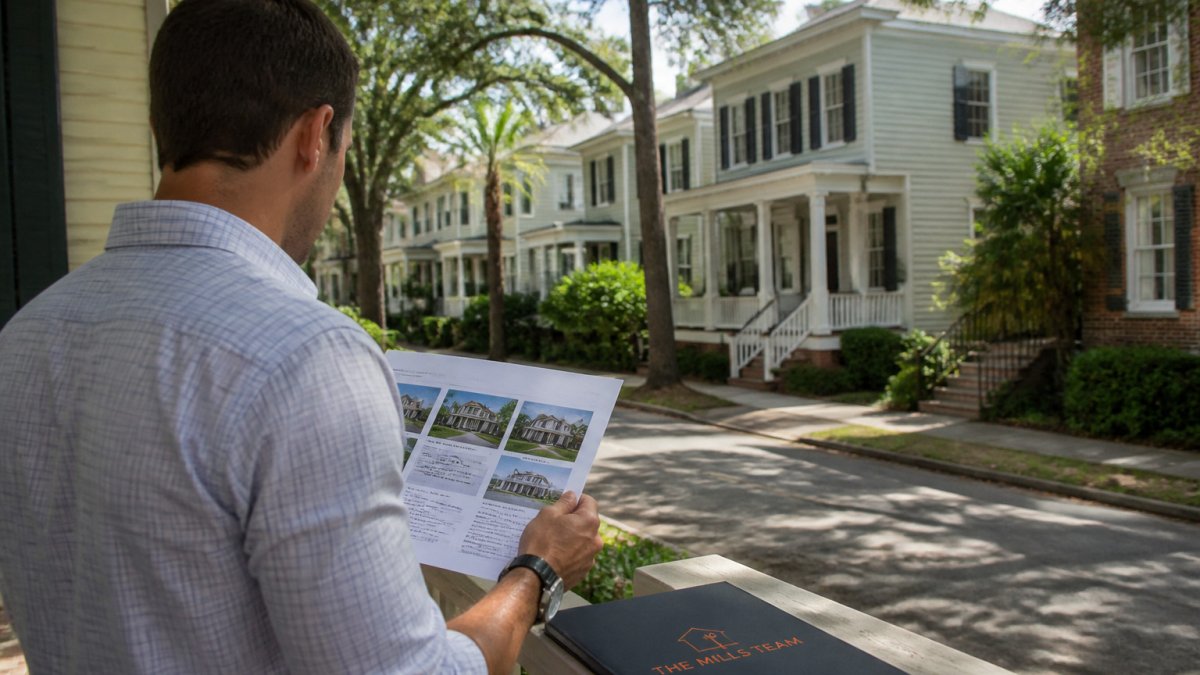
Happy Homes Property Management’s 2026 Charleston neighborhood guide compares several of these areas for rental investment, while Southern Bell Living’s neighborhood breakdown covers home prices and investment potential. Read both, then compare your shortlist on rent per dollar of purchase price.
Neighborhoods with higher purchase prices can still produce strong rents, but the yield often shrinks. Lower-priced areas may show better initial yields and carry more maintenance or vacancy risk. Choose based on the numbers for each property, not on reputation alone.
Insurance, Flood Exposure, Financing and Ownership Costs
Coastal and Lowcountry properties carry insurance and flood considerations that many national guides skip. Charleston’s hurricane risk and flood zones can materially change your cash flow and risk profile. Before you make an offer, obtain quotes for both hazard insurance and flood insurance, and check the property’s flood zone designation (FEMA maps). Wind coverage often carries separate deductibles (e.g., 2% of dwelling coverage) that can be thousands of dollars out of pocket. Our guide to homeowners insurance in Summerville covers what is included, what is not, and the wind and flood questions Lowcountry owners should ask. Flood insurance, if required by your lender, can add $1,000-$3,000 or more annually depending on elevation and zone.
Financing Options for Investors
Investor loans differ from owner-occupied mortgages. Common options include:
- Conventional investment property loans: Typically require 15-25% down and higher credit scores; rates are often 0.5-1% higher than primary residence loans.
- DSCR loans: Qualify based on the property’s rental income rather than your personal income; down payments can be 20-25% and rates vary.
- Hard money loans: Short-term, higher-rate financing for fix-and-flip or distressed properties.
Compare lenders directly and get quotes for rates, points, and closing costs. Easy Street Capital’s South Carolina rental loan page describes some options, but specific terms are not listed here.
Property Taxes and Ownership Costs
South Carolina assesses investment property at a 6% ratio of fair market value, while owner-occupied primary residences are assessed at 4%. This means your annual property tax bill will be higher for a rental. Charleston County’s millage rate varies by municipality; confirm the current rate with the county assessor. Our homeowner’s guide to property taxes explains how Summerville taxes are calculated, how exemptions and appeals work, and what happens if payments fall behind. Additionally, factor in:
- Closing costs: 2-5% of purchase price, including lender fees, title insurance, and recording fees.
- Depreciation: Residential rental property can be depreciated over 27.5 years, providing a tax shield (consult a CPA).
- Maintenance reserves: Budget 5-10% of rent annually for repairs and capital expenditures.
Budget ownership costs using current, property-specific information.
Flood and wind coverage can vary dramatically by property. Always get property-specific quotes before removing your inspection contingency.
Planning Your First Charleston Investment With The Mills Team
Charleston can work as an investment market, but success depends on the specific property, your financing, and realistic expectations for rent and appreciation. Start with a shortlist of two or three neighborhoods, run a conservative rental model for each, and verify local rules before you make an offer.
The Mills Team provides full-service real estate representation across the Charleston Tri-County area, guiding clients through buying, selling, and investing. The team brings 69-plus years of combined local experience and supports clients from the first conversation to closing. If you are ready to start, you can browse current Charleston homes for sale and begin comparing options that fit your numbers.
Frequently Asked Questions
Are home prices dropping in Charleston, SC?
Check recent sold data for the specific submarket before you make an offer on an investment property.
What is the richest neighborhood in Charleston, South Carolina?
Income data for individual Charleston neighborhoods was not verified in the research used for this article, so this page does not name a richest neighborhood. For an investment decision, household income matters less than rental demand, purchase price relative to achievable rent, and the local rules that apply to a specific property. Compare the submarkets covered in this guide using current listing and rental data before choosing a location.
When is a bad time to buy in Charleston, SC?
The better question is whether the numbers work at your purchase price, financing cost and expected rent. A purchase that works on conservative rent and vacancy assumptions is more resilient than one that depends on appreciation continuing.
How do short-term rental regulations affect investment properties in Charleston?
Before buying for short-term use, confirm the rules that apply to that exact address with the city or county.
