

Table of Contents
- Goose Creek vs Summerville SC: Overview and Key Differences
- Housing Affordability: Goose Creek SC Pros and Cons
- Cost of Living in Summerville SC: What to Expect
- Schools, Safety, and Family Life: Goose Creek or Summerville for Families
- Commute Comparison: Goose Creek to Summerville and Beyond
- Neighborhoods, Amenities, and Community Character
- Which Community Is Right for You?
- Frequently Asked Questions
Last Updated: October 10, 2026
Goose Creek vs Summerville SC: Overview and Key Differences
Choosing between Goose Creek and Summerville depends on your priorities: affordability, commute, neighborhood character, or schools. Goose Creek attracts budget-conscious families and first-time homebuyers with lower median home prices. Summerville appeals to buyers prioritizing established neighborhoods and walkability. The Mills Team works with buyers in both communities and has seen families choose Goose Creek to stretch budgets further, while others pick Summerville for neighborhood feel.
Both communities are growing. If you’re relocating to the Charleston area, visiting neighborhoods in person matters more than any comparison. Drive the routes you’d actually commute, visit on weekends, and check out local restaurants and parks.
Housing Affordability: Goose Creek SC Pros and Cons
Goose Creek offers more square footage per dollar than Summerville, which matters for first-time buyers and tight budgets. The trade-off is neighborhood maturity: Goose Creek has newer construction and developing areas alongside established pockets, with more variation in lot sizes, home ages, and infrastructure.
Families should research specific school zones before buying. Growth brings opportunity and challenges: traffic patterns shift, commercial development changes character, and property values fluctuate as infrastructure catches up.
Goose Creek housing highlights:
- Lower entry price for comparable square footage
- Mix of newer construction and established homes
- More variability in neighborhood maturity
- Growing community with ongoing development
If your primary goal is maximizing square footage on your budget, Goose Creek delivers. If you want predictability and established neighborhood character, you’ll pay more in Summerville.
Cost of Living in Summerville SC: What to Expect
Home Purchase Prices
Median home prices in Summerville typically run 20-35% higher than comparable homes in Goose Creek. Newer construction and high-demand school zones command steeper premiums, reflecting walkability and community character.
Property Taxes and Annual Costs
Property tax rates in Summerville generally fall 0.55-0.65% of assessed home value annually. Summerville’s higher median prices mean larger tax bills: a $400,000 home carries roughly $2,200-$2,600 annually, while a comparable $300,000 home in Goose Creek runs $1,650-$1,950.
HOA fees are common in Summerville ($150-$400+ monthly) and Goose Creek ($100-$250 monthly). Verify fees and coverage before making an offer, they significantly affect monthly housing costs.
Utilities and Insurance
Utility costs are comparable between communities. Homeowners insurance varies by flood zone: homes in flood-prone areas can see $1,000-$3,000+ annually, while homes outside flood zones pay little. Request a flood zone determination and insurance quote before closing, this hidden cost can swing affordability.
Neighborhood-Level Cost Variation
Summerville’s historic downtown commands highest prices; outer subdivisions blur the line with Goose Creek. Goose Creek’s neighborhoods near I-26 and the Navy base are pricier than outlying areas. Affordability depends on specific neighborhoods, not city name alone.
Total Monthly Housing Cost Comparison
A $350,000 Summerville home with a $280,000 mortgage totals roughly $2,260-$2,610 monthly (principal, interest, taxes, insurance, HOA). A $280,000 Goose Creek home totals $1,730-$1,980 monthly. The difference compounds over 30 years.
The Walkability Premium
Summerville’s premium reflects walkable downtown access, established parks, and community character. If walkability matters, the premium is intentional. If you’re willing to drive, Goose Creek’s lower costs let you invest equity faster or upgrade square footage.
Summerville’s cost premium extends beyond the purchase price to property taxes, HOA fees, and insurance. Verify flood zone status and insurance costs in any neighborhood, they can add $100-$300+ monthly to your housing budget and vary significantly within each community.
Schools, Safety, and Family Life: Goose Creek or Summerville for Families
Research specific school zones and ratings, performance varies by neighborhood. Goose Creek’s schools adapt to growth; some prefer newer infrastructure, others prefer established systems. Summerville’s schools benefit from longer history and stable enrollment, with established infrastructure reflecting years of investment.
Safety varies by neighborhood in both communities. Summerville’s established neighborhoods tend to have lower crime rates, while Goose Creek’s safety profile depends heavily on which area you’re considering. Talk to residents, check local crime data, and visit neighborhoods during different times of day before deciding.
For families with young children, Summerville’s parks and recreational infrastructure are well-developed. Goose Creek is adding parks and recreation as the community grows, but Summerville has the advantage of established options.
Don’t assume all neighborhoods in either community are equally safe or family-friendly. Crime rates, school quality, and community feel vary significantly by street and subdivision. Visit multiple times and talk to current residents.
Commute Comparison: Goose Creek to Summerville and Beyond
Commute time is often the deciding factor for working families and military households. The comparison depends entirely on your destination and when you’re traveling. Here’s how to evaluate the real impact.
Commute to Navy Base (North Charleston)
Goose Creek’s primary advantage is proximity to Naval Weapons Station Charleston in North Charleston. Off-peak commute times from central Goose Creek to the base run 15-20 minutes via I-26 East. During peak morning hours (6:30-8:30 a.m.), expect 25-35 minutes depending on traffic and your specific neighborhood within Goose Creek.
From Summerville to the Navy base, off-peak times are 20-25 minutes, but peak-hour commutes stretch to 40-50 minutes. The additional distance and I-26 bottlenecks near downtown Charleston add significant time. For military families with daily base commutes, Goose Creek saves 10-20 minutes each way, roughly 3-7 hours per week. Over a year, that’s meaningful time reclaimed.
Military families should also consider shift schedules: early-morning departures (5:00-6:00 a.m.) see lighter traffic, reducing the Summerville-to-base commute to 25-30 minutes. Evening shift workers heading to the base at 2:00-3:00 p.m. face moderate traffic from both communities.
Commute to Downtown Charleston
Summerville has a slight advantage for downtown commutes. Off-peak travel from Summerville to downtown runs 20-25 minutes via I-26 West. Peak morning hours (7:00-9:00 a.m.) extend this to 35-45 minutes. Evening return commutes (4:30-6:30 p.m.) are typically 40-50 minutes due to heavy westbound traffic on I-26.
From Goose Creek to downtown, off-peak commutes run 25-30 minutes, but peak hours stretch to 45-55 minutes. The longer distance and I-26 congestion near the Charleston peninsula make this a less attractive daily commute.
I-26 Corridor Congestion Patterns
Both communities rely on I-26, which is the primary corridor connecting the Charleston area. Westbound traffic (toward downtown) is heaviest 7:00-9:00 a.m. and 4:30-6:30 p.m. Eastbound traffic (toward the Navy base and Goose Creek) peaks 6:30-8:30 a.m. and 5:00-6:30 p.m. During these windows, expect 15-20 minute delays beyond normal travel time, regardless of which community you live in.
Seasonal patterns matter: summer tourism and holiday travel increase I-26 congestion significantly. Hurricane season (June-November) can create unexpected delays due to evacuations or weather-related closures. If you have flexibility in your commute time, traveling outside peak hours reduces stress and saves 20-30 minutes each way.
Alternative Routes and Flexibility
Neither community offers reliable alternative routes to downtown or the Navy base. US-52 from Goose Creek toward downtown is slower than I-26 and adds 10-15 minutes to the commute. Summerville residents have no practical bypass around I-26 for downtown commutes.
Commute by Specific Destination
If your workplace is in the Charleston area but not downtown or the Navy base, for example, the Medical University of South Carolina, the airport, or businesses in West Ashley, your commute advantage depends on that specific location. Map your actual route using Google Maps or similar tools, check traffic during your intended commute times, and factor in seasonal variation.
Remote Work and Flexibility
If you work from home or have a flexible schedule, commute time becomes a minor factor. In this case, choose based on neighborhood character, affordability, schools, and lifestyle, not proximity to a physical workplace.
| Commute Destination | Goose Creek Off-Peak | Goose Creek Peak | Summerville Off-Peak | Summerville Peak | Advantage |
|---|---|---|---|---|---|
| Navy Base (North Charleston) | 15-20 min | 25-35 min | 20-25 min | 40-50 min | Goose Creek (10-15 min faster) |
| Downtown Charleston | 25-30 min | 45-55 min | 20-25 min | 35-45 min | Summerville (5-10 min faster) |
| Medical University of South Carolina | 20-25 min | 35-45 min | 15-20 min | 30-40 min | Summerville (5-10 min faster) |
| Charleston Airport | 25-30 min | 40-50 min | 20-25 min | 35-45 min | Summerville (5-10 min faster) |
Before choosing between these communities based on commute, use Google Maps to check actual drive times during your intended departure time on a typical weekday. Traffic patterns vary by season and day of week. If you’re relocating for a military assignment, confirm your specific base location and shift schedule, that determines whether Goose Creek’s proximity is worth the trade-off in neighborhood character.
Neighborhoods, Amenities, and Community Character
Summerville’s downtown is its defining feature. Tree-lined streets, local restaurants, shops, and a strong sense of community create a walkable downtown experience. This character is what draws many residents and justifies the higher prices.
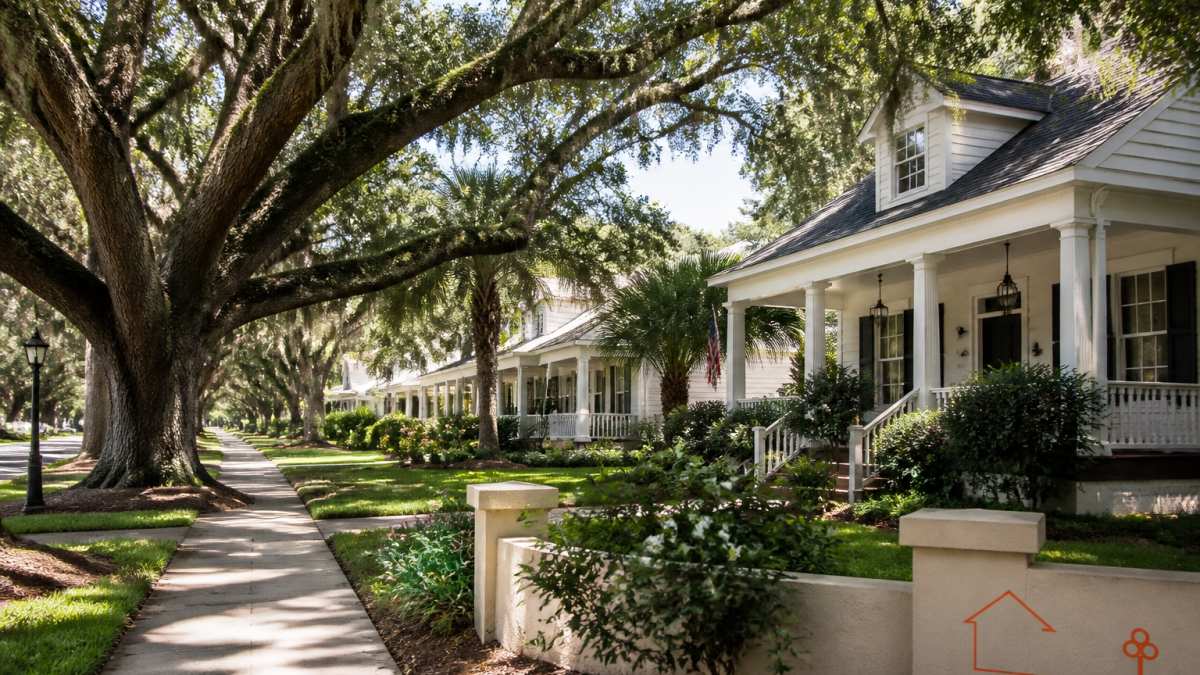
Goose Creek’s character is evolving. Newer neighborhoods offer modern homes and amenities, but the community lacks Summerville’s established downtown feel. Shopping and dining are more car-dependent, though new development is changing this gradually.
For recreation, Summerville has established parks, trails, and community programs. Goose Creek is adding these amenities as it grows, but Summerville has a head start.
Summerville appeals to buyers who value walkability, established community character, and local charm. Goose Creek suits buyers who prioritize affordability and don’t mind a car-dependent lifestyle or are willing to wait for neighborhood development.
Which Community Is Right for You?
Choose Goose Creek if you’re a first-time buyer on a budget, need maximum square footage, or work near the Navy base and want a short commute. The lower prices let you build equity faster, and newer construction often comes with fewer maintenance surprises.
Choose Summerville if you value walkable neighborhoods, established schools, and community character. You’ll pay more, but you’re buying into a mature community with proven infrastructure and a strong sense of place. It’s ideal for families planning to stay long-term or retirees seeking an active lifestyle.
Military families relocating to the Charleston area often choose Goose Creek for the commute advantage to the base, though Summerville works well if the base isn’t your primary destination. First-time buyers almost always find Goose Creek more accessible; established families often prefer Summerville.
The Mills Team works with buyers making this exact decision every month. We help first-time buyers understand what they can afford in each community, military families navigate the commute trade-offs, and families with specific school priorities find the right neighborhoods. Our local expertise spans both communities, and we’ve helped families relocate to the Charleston area understand the real differences between living in Goose Creek vs Summerville.
Choosing between Goose Creek and Summerville is a personal decision based on your priorities, budget, and lifestyle. The Mills Team specializes in helping buyers across the Charleston area find the right community fit. With decades of local expertise and a proven track record selling homes in both Goose Creek and Summerville, we guide first-time buyers, military families, and relocating professionals through this decision with clarity and confidence. Get started with The Mills Team and find your ideal Charleston-area home today.
Frequently Asked Questions
What are the main differences between living in Goose Creek and Summerville?
Goose Creek typically offers lower median home prices and more square footage per dollar, making it attractive for budget-conscious buyers. Summerville commands higher prices but provides a more established, upscale suburban character with tree-lined streets and a charming downtown. Goose Creek is closer to Charleston by mileage, while Summerville appeals to families seeking a distinct, walkable community feel. Both communities offer good schools and family-friendly amenities, but Summerville’s cost of living is generally higher across housing, property taxes, and local services.
Is Goose Creek or Summerville better for families?
Both communities serve families well, but with different priorities. Goose Creek works best for families prioritizing affordability and square footage, with solid schools and parks at a lower price point. Summerville suits families seeking established neighborhoods, highly-rated schools, walkable downtown amenities, and a tight-knit community atmosphere, even at a premium cost. Military families relocating with VA loans often find Goose Creek’s affordability advantageous, while families with flexible budgets may prefer Summerville’s established character and amenities.
How do commute options compare between Goose Creek and Summerville?
Commute times vary significantly based on your specific destination and the time of day. Both communities connect to major highways, but I-26 congestion can extend travel times during peak hours. It’s always best to check your specific route and intended travel times before deciding.
What should homebuyers compare when choosing between Goose Creek and Summerville?
Prioritize housing costs, commute time to your workplace, school ratings if you have children, neighborhood character, and long-term property appreciation. Compare median home prices, property taxes, insurance costs, and available square footage. Factor in your lifestyle preferences: Goose Creek emphasizes affordability and practicality, while Summerville emphasizes established charm and community feel. Work with a local real estate agent who can provide current market data, neighborhood-level school performance, and safety statistics to inform your decision.