Table of Contents
- Why Affordable Neighborhoods Matter for First-Time Buyers in Charleston
- Quick Comparison: Our Top 5 Picks at a Glance
- 1. Lincolnville: The Most Affordable Option
- 2. Wescott Plantation: Growing Community Near North Charleston
- 3. Ashley Heights and Woodside: West Ashley Starter Homes
- Best Charleston Suburbs for First-Time Buyers: Moncks Corner and Hanahan
- First-Time Homebuyer Programs in South Carolina and Local Resources
- Understanding the Charleston Real Estate Market for Your Purchase
- Frequently Asked Questions
Last Updated: October 17, 2026
Why Affordable Neighborhoods Matter for First-Time Buyers in Charleston
The Charleston market has shifted: prices have climbed and first-time buyers face tougher competition. But affordability isn’t just the cheapest price tag, it’s finding neighborhoods where you can build equity, stay long-term, and not stretch your budget to the breaking point.
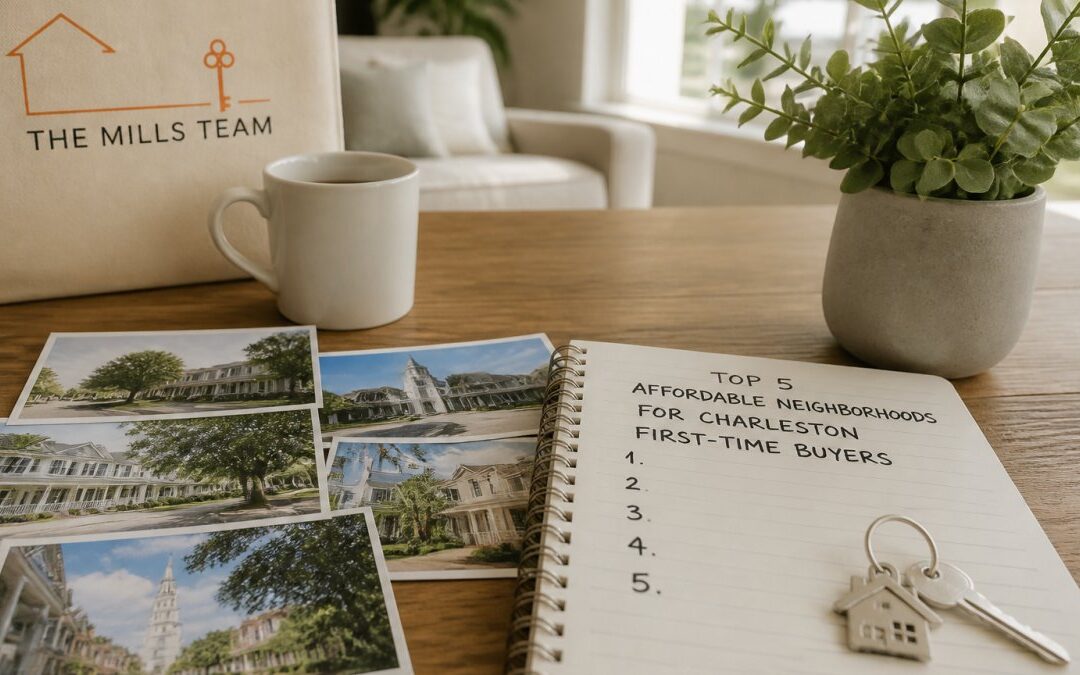
At The Mills Team, we’ve helped hundreds of first-time buyers navigate this market by identifying the top 5 affordable neighborhoods for Charleston first time buyers. These neighborhoods share one thing: real value without a financial corner, starter homes exist, down payments go further, and you’re not competing against five other offers in 48 hours.
Buying affordable versus stretching for a trendy neighborhood comes down to whether you can afford to stay. When your budget is maxed out, a roof replacement or job transition becomes a crisis instead of a manageable expense.
The top 5 affordable neighborhoods for Charleston first-time buyers combine reasonable home prices, walkable amenities, and strong community character. These areas let you build equity without overextending your finances.
Quick Comparison: Our Top 5 Picks at a Glance
| Neighborhood | Home Type | Character | Best For |
|---|---|---|---|
| Lincolnville | Single-family, bungalows | Historic, walkable, artistic | Budget-conscious buyers, creatives |
| Wescott Plantation | Townhomes, single-family | Growing suburban, modern | Families wanting new construction |
| Ashley Heights & Woodside | Bungalows, single-family | Mid-century charm, tree-lined | Buyers seeking character and walkability |
| Moncks Corner | Single-family, townhomes | Rural-suburban blend, quiet | Those prioritizing space and commute flexibility |
| Hanahan | Single-family, newer homes | Suburban, family-oriented | Families with schools as priority |
1. Lincolnville: The Most Affordable Option
Lincolnville is the most affordable entry point for first-time buyers in the Charleston area, for structural reasons: the housing stock is older, smaller, and priced below surrounding submarkets.
What makes Lincolnville work is straightforward: inventory exists in the size and condition band that fits starter budgets. The typical starter purchase is a two-bedroom bungalow or three-bedroom cottage in the roughly 900-to-1,400-square-foot range; three-bedroom single-family homes usually carry a premium or need renovation.
Affordability in Lincolnville is not only the listing price. Three neighborhood-specific factors drive total monthly cost:
- Older systems. Plumbing, electrical panels, and roofs on mid-century stock are frequently at or past their service life. A pre-purchase inspection that scopes the sewer line and the electrical panel is not optional here; it is the difference between a manageable starter home and a surprise five-figure repair.
- Insurance and wind mitigation. Coastal South Carolina policies carry wind and flood components, and older roofs can raise premiums until they are replaced. Ask for a wind-mitigation inspection and get insurance quotes before removing contingencies, not after.
- Property tax reassessment. South Carolina assesses owner-occupied primary residences at a lower ratio than second homes and rentals, so confirm the home qualifies for the owner-occupied rate and that the prior owner’s assessment reflects market value.
Walkability is genuine: King Street runs through the neighborhood with coffee shops, galleries, restaurants, and independent retailers, so a car-light lifestyle is realistic for buyers who work nearby or remotely. For peninsula or medical-district commuters, the drive is short but traffic-dependent, test it at rush hour before you commit.
The trade-off is honest: some blocks show their age, and renovation tolerance is part of the purchase price. Buyers who can handle a project or accept deferred maintenance find real value.
Walk the neighborhood on a weekday morning and a weekend afternoon. Lincolnville’s real personality emerges when the coffee shops are full and the street life is in motion. Pair that with a drive to your workplace at rush hour so you understand both the lifestyle and the commute before you make an offer.
Lincolnville’s affordability comes from smaller square footage, older systems, and a lower entry price than neighboring submarkets. Budget for inspection, insurance, and near-term repairs alongside the purchase price, and the neighborhood can be the lowest total-cost entry into the Charleston market.
2. Wescott Plantation: Growing Community Near North Charleston
Wescott Plantation sits near the North Charleston and Summerville line, offering a different flavor than historic Lincolnville. This is newer construction territory: townhomes and single-family homes built in the last 10-15 years, meaning fewer surprises with systems and structures.
For families, Wescott Plantation checks multiple boxes: schools nearby, planned amenities like parks, walking trails, and green spaces, and modern layouts with energy-efficient systems.
The neighborhood appeals to buyers who prioritize predictability. Homeowners association fees apply, so factor those into monthly costs, but in exchange you get maintained common areas and a managed community environment.
Wescott Plantation works especially well for buyers relocating who don’t have time to hunt for a fixer-upper. Move-in-ready homes reduce the stress of settling into a new city, and the community is still growing, so values have room to appreciate as amenities expand.
Families relocating to the Charleston area, military personnel on a timeline, and buyers who want modern construction without renovation projects.
3. Ashley Heights and Woodside: West Ashley Starter Homes
Ashley Heights and Woodside sit in West Ashley, just across the Ashley River from downtown. They offer what Lincolnville has, walkability and character, with a different aesthetic: mid-century bungalows and single-family homes on tree-covered streets, quieter and more residential but equally authentic.
West Ashley’s appeal centers on proximity and affordability: minutes from downtown without downtown prices, real walkability to local shops, restaurants, and services, abundant parks, and well-regarded nearby schools.
Home types range from two-bedroom bungalows to three- and four-bedroom single-family homes, with varied architectural styles. Some are recently updated; others retain original character. That variety is an advantage, you can find something in your specific budget range.
The neighborhood’s main strength is balance: walkability without downtown’s premium, character without the renovation intensity of older historic neighborhoods, and space without the sprawl of further-out developments.
Best Charleston Suburbs for First-Time Buyers: Moncks Corner and Hanahan
Beyond the immediate Charleston area, Moncks Corner and Hanahan emerge as strong options, offering different trade-offs for buyers whose priorities shift toward space, schools, or commute flexibility.
Moncks Corner sits about 30 miles northwest of downtown, rural-suburban in character with larger lots, newer construction, and significantly more space than closer to the city. Single-family homes dominate, and the appeal is straightforward: your budget stretches further for more square footage, land, and newer systems.
The trade-off is commute: a downtown job means a 45-minute to hour-long drive, which matters for daily quality of life. But for remote workers, north-side jobs, or buyers prioritizing space and affordability over proximity, Moncks Corner makes real sense.
Hanahan sits closer, about 15 minutes north of downtown, a middle ground with suburban space and no extended commute. Single-family homes and newer townhomes dominate, and schools are a major draw. Families often find Hanahan hits the right balance: affordability, space, and reasonable city access.
Both suburbs attract first-time buyers who’ve done the math and realized a longer commute saves enough on home price to justify the trade-off, a legitimate calculation, not a compromise.
First-Time Homebuyer Programs in South Carolina and Local Resources
First-time buyers in South Carolina have access to a layered set of programs, and the difference between a smooth closing and a stalled application usually comes down to understanding how the layers fit together.
State housing finance agency programs. The South Carolina State Housing Finance and Development Authority administers first-time buyer programs that pair a below-market first mortgage with down payment assistance.
South Carolina State Housing Finance and Development Authority homebuyer programs
Down payment assistance mechanics. Assistance generally appears in two forms: grants that do not require repayment, and subordinate liens repaid over time or forgiven after a set occupancy period. The second form is more common because it stretches program funds further.
Loan-type tradeoffs for first-time buyers.
- Conventional loans with low down payment options are widely available and often pair with state assistance, but private mortgage insurance applies until you reach sufficient equity.
- FHA loans allow lower credit scores and smaller down payments, and they are assumable in some cases, which can be a resale advantage. Mortgage insurance premiums apply for the life of most FHA loans, so compare the long-run cost against conventional.
- VA loans for eligible active-duty service members, veterans, and surviving spouses often require no down payment and no monthly mortgage insurance, which changes the math entirely. The VA funding fee applies unless exempt, and the property must meet VA minimum property requirements.
- USDA loans can apply to eligible rural-adjacent areas, and some outlying communities around the metro may qualify. Income limits and area eligibility maps determine whether a specific address works.
Closing costs. Buyers should budget for lender fees, title insurance, recording fees, prepaid interest, escrow deposits for taxes and insurance, and any program origination fees. South Carolina buyers also encounter state and local recording costs and, depending on the transaction, transfer-related fees.
Credit and counseling requirements. Many assistance programs require a homebuyer education course from a HUD-approved counseling agency. Completing the course early shortens the timeline later.
Do not assume every lender is equally fluent in state down payment assistance. Some treat these programs as edge cases; others process them weekly. Ask how many state-assisted loans the loan officer closed in the past year, and confirm the lender is approved to originate the specific program you are using. A mismatch here is one of the most common reasons closings slip.
Stack the pieces deliberately: choose a loan type that fits your credit and service history, pair it with state down payment assistance if you qualify, complete homebuyer education early, and get a lender who closes these programs routinely. That sequence is what turns eligibility into a set of keys.
Understanding the Charleston Real Estate Market for Your Purchase
The Charleston market in 2026 remains competitive for first-time buyers, but not uniformly across all neighborhoods, which is why selecting from the top 5 affordable neighborhoods for Charleston first time buyers matters so much.
In the neighborhoods we’ve covered, inventory exists: homes stay on the market long enough to see them, schedule inspections, and make thoughtful decisions.
Market conditions shift, but the fundamentals hold: affordable neighborhoods typically have more inventory because fewer buyers compete for them.
When you’re ready to search, work with an agent who knows these neighborhoods specifically.
The Mills Team has spent decades building this neighborhood expertise across the Charleston Tri-County area. We’ve tracked how these communities evolve, where first-time buyers succeed, and which neighborhoods deliver real long-term value.
Finding your first home in Charleston doesn’t require stretching your budget to the absolute limit. The neighborhoods we’ve covered offer genuine affordability without sacrificing character, walkability, or community.
The Mills Team specializes in guiding first-time buyers through this exact process. We provide accurate, agent-prepared home valuations, expert guidance navigating down payment assistance programs, and full-service support from your first conversation through closing.
Frequently Asked Questions
What are the most affordable neighborhoods in Charleston for first-time buyers?
Lincolnville, Wescott Plantation, Ashley Heights, Woodside, Moncks Corner, and Hanahan rank among the most affordable neighborhoods in the Charleston area. Lincolnville offers the lowest median prices, while Wescott Plantation and West Ashley neighborhoods provide good value with proximity to amenities. Each offers different home types, from starter bungalows to townhomes, making them suitable for various buyer budgets and preferences.
What first-time homebuyer programs are available in South Carolina?
South Carolina offers several first-time homebuyer assistance programs, including down payment assistance grants, favorable loan terms through state housing agencies, and programs targeting military veterans. Many programs are income-based and can reduce the upfront cash needed to purchase. The Mills Team can connect you with local resources and explain which programs align with your financial situation and purchase timeline.
How is the Charleston real estate market affecting first-time buyers right now?
The Charleston real estate market remains competitive but offers opportunities in emerging neighborhoods. Affordable areas like Lincolnville and Wescott Plantation provide entry points for first-time buyers, while inventory in these neighborhoods tends to move steadily. Working with an experienced local agent helps you understand current conditions, identify undervalued opportunities, and position your offer competitively in this market.
What home types should I expect to find in affordable Charleston neighborhoods?
Affordable neighborhoods feature a mix of single-family homes, bungalows, condos, and townhomes. Starter homes in these areas typically range from two to three bedrooms. Some neighborhoods emphasize mid-century bungalows with character, while others offer newer construction or recently renovated properties. Your budget and lifestyle preferences will guide which home type and neighborhood combination works best for you.