
Table of Contents
- Understanding the New Construction Home Buying Process
- New Construction Financing Process: Loans and Pre-Approval
- Researching and Selecting a Home Builder
- Negotiating with Home Builders: What You Need to Know
- New Construction Home Inspection Checklist and Final Walkthrough
- Builder Warranties, Contingencies, and Timeline Expectations
- Budgeting for New Construction: Energy Efficiency and Long-Term Savings
- Pros and Cons of Buying New Construction in 2026
Last Updated: August 27, 2026
Understanding the New Construction Home Buying Process
Buying a new construction home differs fundamentally from purchasing existing property. You’re committing to a vision, navigating construction timelines, and working within the builder’s framework. The process requires understanding how builders operate, what you can negotiate, and where hidden costs hide beneath the base price.
At The Mills Team, we’ve guided many first-time buyers through new construction purchases in the Charleston area. The biggest mistake we see is treating a new build like a resale. The builder controls the timeline, contract terms, and major decisions. Your role is to understand these constraints upfront and negotiate strategically within them.
The process starts before you visit a model home. You need pre-approval, clarity on your budget including hidden costs, and realistic expectations about customization. Then comes builder selection, contract negotiation, inspections at key phases, and the critical final walkthrough before closing.
New Construction Financing Process: Loans and Pre-Approval
Construction Loans vs. Traditional Mortgages
Most new construction buyers don’t need a construction loan. A construction loan is designed for custom builds where you finance the build phase separately from permanent financing. The lender disburses funds in stages as construction progresses, and you pay interest only during construction before converting to a permanent mortgage at closing.
A traditional mortgage with a builder contingency is what you want for most new construction purchases. You get pre-approved for the full purchase price, the builder finances construction, and at closing you take out your permanent mortgage. It’s cleaner, cheaper, and faster than a construction loan.
The exception: if you’re buying a lot and building custom, or if the builder isn’t offering builder financing, then a construction loan makes sense.
Getting Pre-Approved Before Builder Selection
Pre-approval is non-negotiable before visiting a model home. Walking in with pre-approval signals you can close, which gives you leverage in negotiations. Without it, the builder treats you as uncommitted and won’t negotiate on price, incentives, or upgrades.
Pre-approval also locks in your interest rate for 30-60 days depending on your lender. You know exactly what your monthly payment will be, preventing sticker shock when evaluating affordability.
Get pre-approved for the maximum amount you’d consider spending, not just what you think you’ll need. Builders price homes strategically, and you want flexibility to negotiate.
Ask your lender about rate locks extending 90-120 days. Builders often have 60-90 day contingency periods, and you want your rate locked for the full window.
Researching and Selecting a Home Builder
Evaluating Builder Reputation and Track Record
Builder reputation directly impacts your experience and your home’s long-term value. Start with the Better Business Bureau, Google reviews, and local real estate forums. Read negative reviews carefully, are complaints about communication, quality, or timeline?
Ask The Mills Team or other local real estate agents about builders they recommend and which ones to avoid. Agents see the aftermath of builder decisions and know which homes have issues and which builders stand behind their warranty.
Visit completed homes, not just model homes. Model homes are showpieces with upgrades. Completed homes show actual quality levels. Talk to existing owners about their experience and whether the builder has been responsive to warranty issues.
Check the builder’s financial stability. Builders going under mid-construction create nightmares. Ask your lender about this during pre-approval.
Understanding Base Price and Hidden Costs
The advertised price is the base price. Everything else is extra. Base price typically includes the structure, basic finishes, and standard appliances. It does NOT include lot premiums, design center upgrades, extended warranties, HOA fees, or closing costs specific to new construction.
Lot premiums are significant. A corner lot, a lot with a view, or a cul-de-sac lot costs more. Some builders quote base price on their worst lots, then surprise you with substantial lot premiums when you pick your actual lot.
Design center upgrades are the builder’s profit center. Flooring, cabinetry, countertops, lighting, and paint colors all cost extra. A typical buyer spends substantially in the design center on upgrades.
Ask the builder for a detailed cost breakdown before committing. Get it in writing to prevent surprises at the final walkthrough.
Builders sometimes quote “starting at” prices assuming base finishes and the least desirable lot. When you pick your actual lot and finishes, the price can jump significantly. Ask specifically: “What’s the total cost for a home on a standard lot with mid-range design center selections?”
Negotiating with Home Builders: What You Need to Know
Incentives, Upgrades, and Design Center Decisions
Builders negotiate differently than sellers of existing homes. You’re not haggling over price traditionally. You’re negotiating incentives, upgrades, or price reductions tied to the builder’s inventory and timeline goals.
Incentives come in several forms: closing cost assistance, upgraded appliances, free design center selections, or price reductions. These typically appear when the builder has inventory to move or is facing slower sales.
Upgrades are the builder’s preferred negotiation tool. Instead of dropping price, they offer free design center upgrades. This locks you into the builder’s vendor network and selected finishes. Sometimes it’s fair; sometimes you’d rather have cash off the price.
Negotiate the design center budget upfront. If you want specific upgrades included, get it in writing before selecting finishes. Otherwise, you’ll pick finishes, fall in love with them, then discover they exceed budget.
Legal Pitfalls in Builder-Provided Contracts
Have a real estate attorney review the builder’s contract before signing. Not a friend who knows contracts, a real estate attorney licensed in your state who understands builder contracts.
Builder contracts are heavily weighted in the builder’s favor. Common pitfalls include contingency clauses favoring the builder, vague completion timelines, limited warranty coverage, earnest money at risk, and unclear HOA obligations. An attorney can negotiate these issues and protect your interests.
Don’t skip legal review to save money. A builder contract issue discovered after closing can cost tens of thousands to fix.
The builder’s contract is a starting point, not final. Everything is negotiable. Your attorney will know which clauses to prioritize and which to concede.
New Construction Home Inspection Checklist and Final Walkthrough
What to Inspect Before Closing
The final walkthrough is your last chance to catch issues before you own the home. Bring a detailed checklist and take it seriously.
Check structural elements first. Look for cracks in the foundation, walls, or ceilings, particularly at corners and doorways. Check the grading around the foundation, water should slope away from the home.
Test every light switch, outlet, and fixture. Open and close every door and window. Test HVAC systems and verify thermostats work. Turn on every faucet and check water pressure. Flush every toilet and look under sinks for leaks. choosing a contractor.
Verify appliances match your purchase agreement. Check model numbers and confirm they’re installed correctly and operating. Walk every room looking for gaps, squeaks, or uneven transitions. Examine paint for drips or uneven coverage.
Bring a professional home inspector to the final walkthrough if possible. Document everything with photos and video. Create a punch list of issues and require the builder to address them before closing.
Post-Closing Maintenance for New Systems
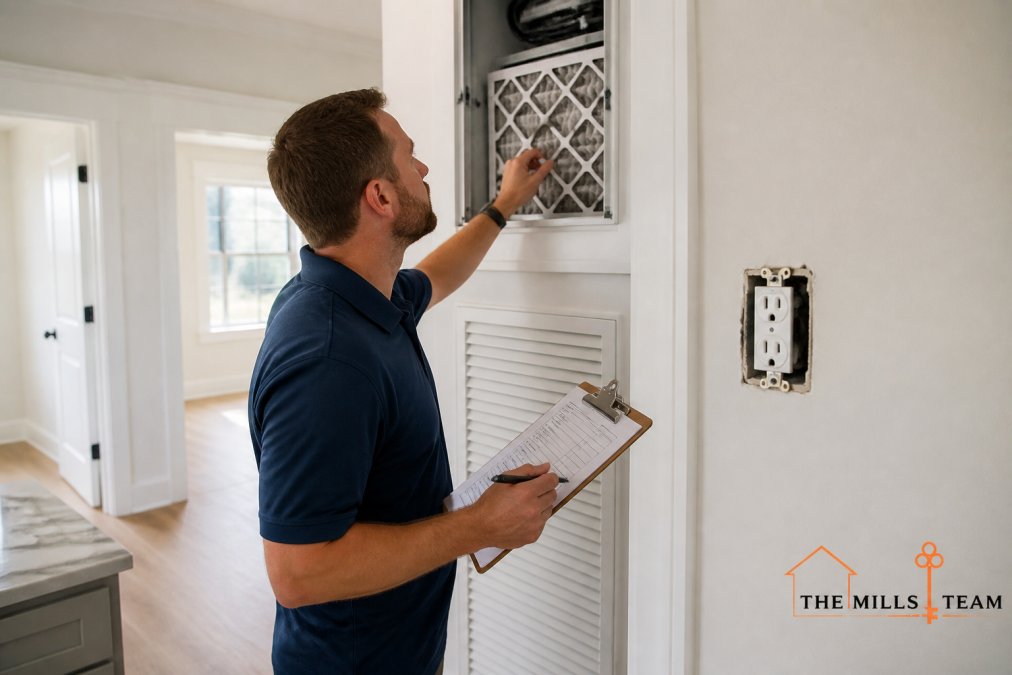
New homes have new systems, but they’re not immune to problems. New HVAC systems need filter changes regularly. New plumbing systems sometimes have air in the lines, causing banging sounds that usually resolve over time. New appliances have break-in periods and sometimes need calibration.
The builder’s warranty covers manufacturing defects, not maintenance. You’re responsible for filter changes, cleaning, and basic upkeep from day one. Neglecting maintenance voids many warranties.
Document everything after closing. Keep receipts for all maintenance and repairs. If a system fails within the warranty period, you’ll need proof that you maintained it properly.
Monitor your home during the first year and photograph any new cracks or issues. Report them to the builder within the warranty period.
Builder Warranties, Contingencies, and Timeline Expectations
Understanding Builder Warranties and Coverage
Builder warranties typically cover one year on workmanship and up to 10 years on structural components, depending on the builder and location (nahb.org). The details matter enormously.
A one-year warranty covers workmanship issues like drywall cracks, paint problems, and cabinet misalignment. Structural warranties usually cover the foundation and framing, but definitions vary. Get the warranty in writing before closing.
Many builders offer extended warranties through third-party companies. For a new home, an extended warranty can be a valuable consideration, extending coverage beyond the standard one year and providing recourse if the builder goes out of business.
Get warranty documentation in writing. The warranty should clearly state what’s covered, for how long, the claim process, and what’s excluded.
Completion Timeline and Construction Phases
New construction timelines are estimates, not guarantees. Delays happen due to weather, supply chain issues, labor shortages, and permit delays. A typical new home takes 4-6 months from foundation to closing (nahb.org).
The builder should provide a detailed timeline showing key phases: foundation, framing, mechanical rough-in, drywall, interior finishes, and final inspections. Your purchase agreement should include a completion date with contingencies for delays beyond the builder’s control.
Visit the construction site periodically if the builder allows. You’ll see progress and catch issues early. If something looks wrong, improper framing, poor electrical work, foundation issues, flag it immediately.
Ask your lender about construction inspections. Many lenders require inspections at key phases before disbursing funds. These inspections catch major issues early and protect both you and the lender.
Budgeting for New Construction: Energy Efficiency and Long-Term Savings
HVAC Systems and Smart Home Integration
New construction homes come with modern HVAC systems, but not all are created equal. A basic builder-grade system meets code but isn’t optimized for efficiency. A high-efficiency system costs more upfront but saves money long-term through lower utility bills.
HVAC efficiency is measured by SEER (Seasonal Energy Efficiency Ratio) for air conditioning and AFUE (Annual Fuel Use Efficiency) for heating (energystar.gov). Higher numbers mean better efficiency. The efficiency difference translates to significant long-term cooling and heating cost savings.
Smart home integration is increasingly standard in new construction. Smart thermostats learn your schedule and adjust temperature automatically. Smart lighting controls reduce energy use. These systems provide convenience and energy savings.
Insulation quality matters more than most buyers realize. New construction homes typically meet minimum code requirements. High-performance homes use enhanced insulation that reduces heating and cooling loads, meaning your HVAC system runs less and utility bills drop.
Energy efficiency improvements have long payback periods. If you plan to stay in the home long-term, energy efficiency upgrades make financial sense.
Closing Costs and Earnest Money Deposits
Earnest money is your good-faith deposit, typically 1-3% of the purchase price. If you back out without a valid contingency, the builder keeps it. If you close, it’s credited toward your down payment.
Closing costs for new construction are similar to resale but with different line items. You’ll pay for the appraisal, title insurance, survey, loan origination fees, and inspections. New construction-specific costs include builder-provided warranty fees and HOA transfer fees.
The builder might offer to pay some closing costs as an incentive. But these concessions reduce the builder’s profit, so they might offset them with higher prices elsewhere. The net effect is often neutral.
Get a loan estimate from your lender early. This shows projected closing costs before you’re locked in. Plan for closing costs to be 2-5% of the purchase price and factor this into your budget.
Pros and Cons of Buying New Construction in 2026
Pros of new construction:
New homes come with modern systems and finishes. You’re not inheriting deferred maintenance. HVAC systems are current, plumbing is up to code, electrical systems are modern. This translates to lower repair costs in the first 5-10 years.
Customization is possible within the builder’s constraints. You choose paint colors, flooring, cabinetry, countertops, and appliances.
Builder warranties provide recourse if something fails. New systems have manufacturer’s warranties plus builder coverage.
New construction homes can appreciate in value.
Cons of new construction:
Timelines are unpredictable. You can’t close until construction is complete. Delays mean extended temporary housing and additional costs.
Builders have pricing power. You can’t shop around the way you do with existing homes. Each builder controls their own pricing, lots, and incentives.
Lot premiums and hidden costs add up fast. By the time you add lot premium, design center upgrades, and closing costs, you might be significantly higher than the base price.
Builder-provided contracts heavily favor the builder. You need an attorney to protect yourself, which adds cost and complexity.
New construction homes sometimes have quality issues that don’t show up immediately. You’re responsible for fixing them after the warranty period.
The bottom line: new construction makes sense if you want modern systems, some customization, and are willing to accept timeline uncertainty. It’s riskier if you need to close quickly or are budget-constrained.
Buying a new construction home requires more planning than most first-time buyers realize. The process involves navigating builder contracts, understanding financing options, and managing construction timelines. The Mills Team has guided many buyers through new construction purchases in the Charleston area, helping them avoid common pitfalls and negotiate effectively with builders. If you’re considering new construction, get started with The Mills Team to ensure you understand every aspect of the purchase before committing.
Frequently Asked Questions
What is the difference between new construction financing and a traditional mortgage?
New construction financing typically uses a construction loan that disburses funds in stages as the builder completes phases of work. Traditional mortgages for resale homes fund the full purchase price at closing. Construction loans often have higher interest rates and require larger down payments. Once construction finishes, you convert to a permanent mortgage. This two-step process differs significantly from buying an existing home, where financing is simpler and faster.
What should I look for during a new construction home inspection?
A thorough new construction home inspection checklist should cover HVAC systems, electrical wiring, plumbing, foundation settling, roof installation, windows and doors for air leaks, insulation quality, appliance functionality, and grading around the foundation for drainage. Inspect the final walkthrough before closing carefully. Check that all builder-promised upgrades and finishes are installed correctly. Look for construction defects, incomplete work, and damage. Hire a professional inspector experienced with new builds, they understand common builder shortcuts and code compliance issues specific to new construction.
What hidden costs should I expect when buying new construction?
Beyond the base price, expect lot premiums for desirable locations, structural upgrades and design center selections, HOA fees and property tax assessments, homeowners association initiation costs, and closing costs. Many builders quote a base price that excludes essential upgrades, exterior features, and site preparation. Builder incentives may offset some costs, but read contracts carefully, incentives sometimes reduce your equity rather than lower your payment. Ask your real estate agent to review the purchase agreement for unexpected fees buried in fine print.
Do I need a real estate agent when buying new construction?
Yes, working with a real estate agent experienced in new construction is valuable. Agents help you understand builder contracts, identify legal pitfalls, negotiate with home builders on your behalf, and ensure contingencies protect your interests. Many buyers assume they can negotiate directly with builders, but agents often secure better terms, incentives, and upgrades. Your agent also coordinates the new construction home inspection checklist, reviews the final walkthrough, and handles closing coordination. Builder agents represent the builder's interests, not yours.
Is 2026 a good year to buy new construction?
The 2026 new construction market depends on interest rates, builder incentives, and local supply. Lower inventory in some markets makes new construction attractive for buyers seeking modern systems and energy efficiency. However, rising property tax assessments and HOA fees in growing areas increase long-term costs. Builder incentives may be available if demand slows. Compare new construction pricing to resale homes in your area, sometimes resale offers better value. Consult with a local real estate agent who understands current market conditions and builder reputation in your region.
What does the new construction financing process timeline look like?
The new construction financing process typically spans the construction period plus closing. After pre-approval, you sign a purchase agreement and provide earnest money. The construction loan funds in stages as the builder completes phases. This can take 6-12 months depending on the home size and builder pace. Once construction finishes, you complete a final walkthrough, your appraisal occurs, and you convert to a permanent mortgage at closing. Total timeline from purchase agreement to move-in is usually 9-15 months. Delays happen, weather, supply chain issues, and permit delays can extend completion timelines.
How do I negotiate with home builders effectively?
Negotiating with home builders requires understanding their incentives and constraints. Builders have more flexibility on upgrades, design center selections, and closing cost assistance than on the base price. Request builder incentives for closing costs, upgraded HVAC systems, smart home integration, or lot premiums. Review the purchase agreement carefully, builders often include clauses that limit your negotiation power. A real estate agent experienced in negotiating with home builders can identify where builders have room to move. Avoid accepting the first offer; builders expect negotiation. Get everything in writing in the purchase agreement.