
Table of Contents
- What Makes a 55+ Community Right for You
- Independent Living vs. Active Adult Communities: Understanding the Difference
- Top 55+ Communities in the Area
- New Construction 55+ Homes: Why They Matter
- Cost of Living and Financial Planning for Retirees
- Transportation, Walkability, and Pet Policies
- How The Mills Team Helps You Find Your Fit
- Conclusion
Last Updated: August 26, 2026
What Makes a 55+ Community Right for You
Finding the right place to retire is one of the biggest decisions you’ll make. It’s not just about location, it’s about lifestyle, independence, and whether a community actually fits how you want to spend your next chapter.
A 55 plus community isn’t one-size-fits-all. Some offer resort-style amenities and packed social calendars. Others prioritize quiet, low-maintenance living with minimal fuss. The real question is: which one matches your priorities?
At The Mills Team, we’ve helped many retirees navigate this choice across the Charleston area. The pattern we see most often? People rush into a decision based on a single feature, a golf course, a clubhouse, proximity to downtown, without understanding what they’re actually signing up for. That’s where clarity matters.
Before you tour a single community, you need to know what you’re looking for. Are you seeking an active lifestyle with constant events and social engagement? Do you want independent living with minimal maintenance? Are you concerned about future healthcare needs? Does proximity to family, downtown attractions, or specific amenities matter most?
These answers shape everything. A gated community with 24-hour security and on-site medical staff serves a different purpose than a low-key neighborhood of single-story homes where you manage your own property. Both are legitimate choices, but they’re not interchangeable.
Before touring any 55+ community, write down your top three non-negotiables. This keeps you focused when amenity-rich marketing departments are showing you everything but what actually matters to your daily life.
Independent Living vs. Active Adult Communities: Understanding the Difference
These terms get used interchangeably, but they describe fundamentally different living arrangements. Understanding the distinction could save you from choosing the wrong community.
Independent living means you own or lease your home and manage everything yourself, maintenance, repairs, yard work, snow removal. You live in a community designed for older adults, but you’re responsible for upkeep. This appeals to people who want autonomy and don’t mind the work, or who have the budget to hire contractors.
Active adult communities go further. They’re typically master-planned neighborhoods with age-restricted policies (usually 55+), but the emphasis shifts to lifestyle and social engagement. Many include amenities like fitness centers, clubhouses, organized events, and sometimes common area maintenance included in HOA fees. The tradeoff: less independence in how you use your property, but more built-in community and fewer headaches.
The supporting keyword here matters: independent living vs active adult communities isn’t a debate about which is "better", it’s about which matches your personality and energy level.
Someone who wants to tinker in the garage and maintain their own landscape might thrive in independent living. Someone who wants to play pickleball three times a week, attend book clubs, and have lawn care handled by the HOA might find that structure energizing rather than restrictive.
Location plays into this too. A walkable community near downtown Charleston with shops and restaurants within reach might feel less isolating even without organized events. A more remote community might need strong social programming to keep residents engaged.
Independent living offers autonomy and flexibility. Active adult communities trade some independence for convenience, social engagement, and built-in lifestyle structure. Your choice depends on whether you want to manage your own property and create your own social calendar.
Top 55+ Communities in the Area
The Charleston area has no shortage of options for retirees. The real challenge is narrowing down communities that match your specific priorities, whether that’s amenities, location, price point, or lifestyle intensity.
When evaluating communities, look beyond the marketing brochure. Ask about actual resident demographics, turnover rates, and how long people typically stay. A community that markets heavily might be turning over residents quickly, a sign that the reality doesn’t match the promise.
Resort-Style Amenities and Lifestyle Features
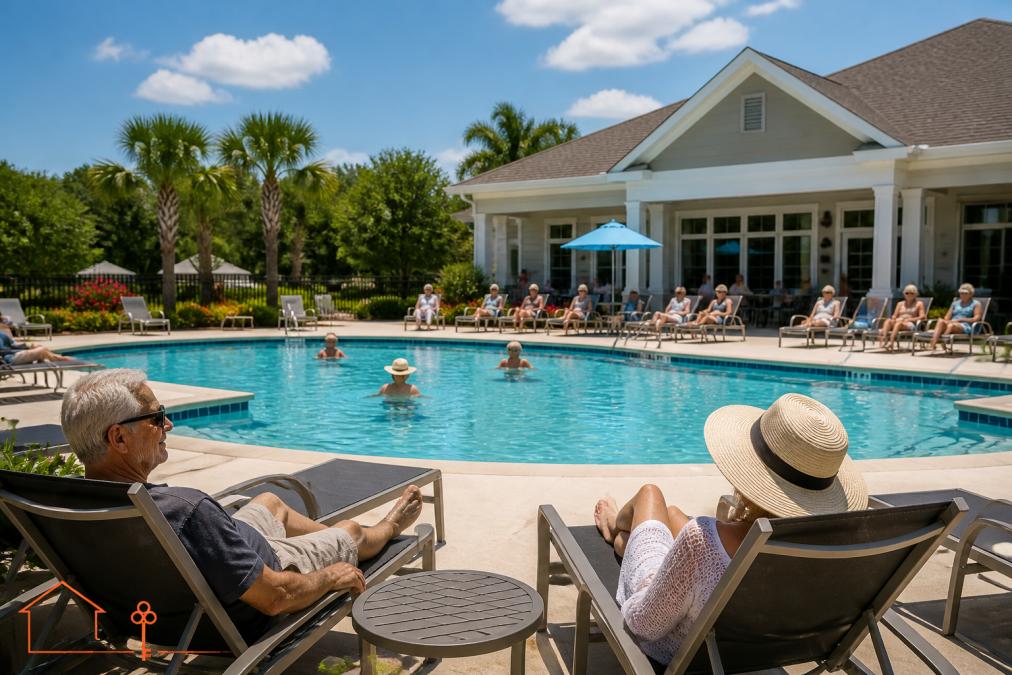
This is where many 55+ communities compete hardest. The amenity list can be staggering: resort-style pools with cabanas, fitness centers with personal trainers, pickleball courts, tennis facilities, golf courses, clubhouses with multiple event spaces, walking trails, and social calendars packed with activities.
Here’s what matters: which amenities do you actually use? A golf course is irrelevant if you don’t golf. Pickleball courts are wasted if you’re not interested in the sport. A packed social calendar sounds great in theory, until you realize you prefer quiet evenings at home.
The best communities offer variety. Someone who wants an active lifestyle should see evidence of actual engagement, not just facilities that sit empty. Talk to current residents about which amenities they use and which ones feel like marketing fluff.
Many retirees also find that the most valuable amenity isn’t on the official list: it’s the community of people. A neighborhood where neighbors know each other, where spontaneous gatherings happen, and where you feel part of something creates more satisfaction than any single facility.
Gated Community Benefits and Security
A gated community provides controlled entry, which appeals to many retirees for practical and psychological reasons. Security staff monitor who comes and goes. Residents feel a sense of protection and exclusivity.
But gated communities also come with tradeoffs. They typically charge higher HOA fees to cover security infrastructure and staffing. Some feel more restrictive, you’re managing who can visit, there are rules about short-term rentals, and the gated entry can feel isolating if you’re not deeply engaged with residents.
The security benefit is real but often overstated in marketing. Most gated 55+ communities in the Charleston area have low crime rates anyway. You’re not moving into a fortress, you’re joining a neighborhood with an entrance gate and some additional oversight. accessible home modifications.
What matters more is whether the gated structure aligns with your lifestyle. If you value privacy and control over who enters, it’s worth the extra cost. If you want a more open, casual neighborhood feel, a non-gated community might suit you better.
Proximity to Healthcare and Downtown
This is where many retirees get the calculation wrong. They focus on proximity to downtown Charleston’s restaurants and entertainment, but underestimate the importance of healthcare access.
A community 20 minutes from a major hospital is different from one 45 minutes away (the NIH). As you age, medical appointments become more frequent. A cardiologist visit, physical therapy, or unexpected ER trip becomes significantly easier when healthcare is close. Some communities even have on-site medical staff or partnerships with local healthcare providers, a real advantage if you’re managing chronic conditions.
Proximity to downtown matters too, but in a different way. Some retirees want walkable access to restaurants, galleries, and cultural events. Others prefer quiet, suburban living and don’t mind driving 15 minutes for entertainment. Be honest about which you actually prefer, not which sounds better in theory.
The Mills Team helps retirees evaluate these tradeoffs by looking at actual daily life, not marketing language. A community that’s 10 minutes from great restaurants but 45 minutes from your cardiologist might feel isolating over time. One that’s 20 minutes from downtown but has immediate healthcare access often proves more practical.
New Construction 55+ Homes: Why They Matter
New construction in 55+ communities deserves special attention. You’re not just buying a home, you’re buying a property designed for your stage of life.
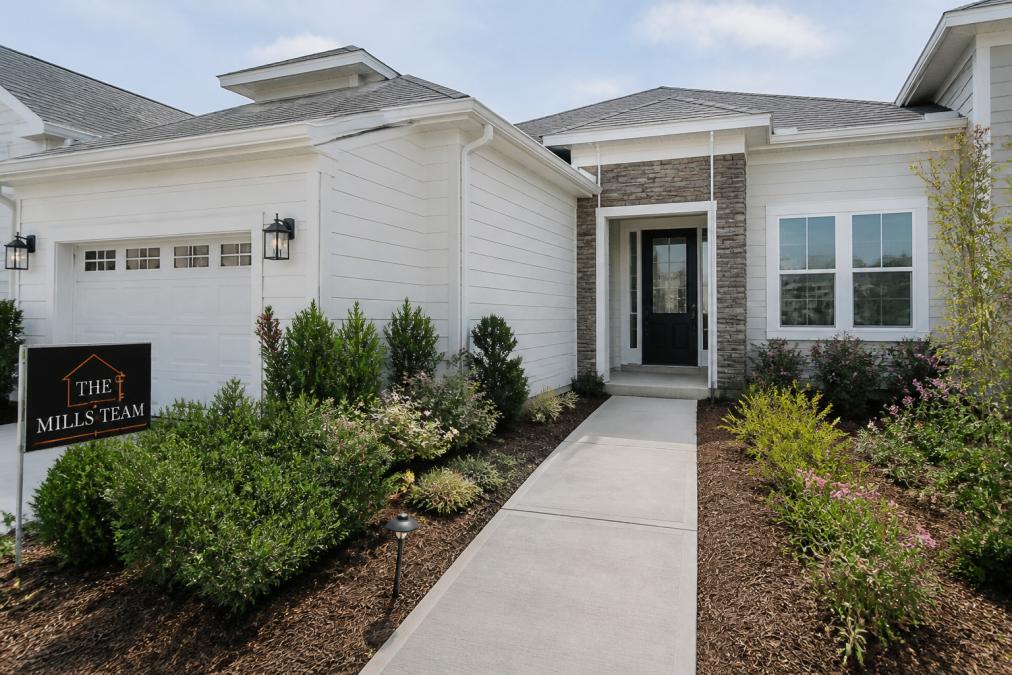
New construction 55 plus homes offer advantages that renovated older properties can’t match. Single-story floor plans eliminate stairs entirely (the NIH). Wider doorways, accessible bathrooms, and open layouts support aging in place. Energy-efficient systems mean lower utility bills (energy.gov). And crucially, you’re not inheriting someone else’s deferred maintenance or hidden problems.
The tradeoff is timing. New construction takes months to build. You’re buying from plans rather than moving in immediately. But for many retirees, that timeline works perfectly, it gives you time to sell your current home, plan the move, and prepare for a fresh start.
Builders in the Charleston area are increasingly designing new 55+ homes with accessibility in mind from the start, not as an afterthought. That means better resale value down the road, even if you don’t need those features today. Future buyers will appreciate what you’re paying for now.
New construction timelines often slip. Don’t make major life decisions based on a builder’s promised completion date. Build in a 2-3 month buffer for delays, they’re standard, not exceptional.
Cost of Living and Financial Planning for Retirees
This is the conversation nobody wants to have, but it’s essential. Retiring to a new community involves real financial decisions that go beyond the home price.
HOA fees vary dramatically across 55+ communities. Property taxes in the Charleston area are moderate compared to many coastal markets, but they still matter. Some communities are in lower-tax jurisdictions than others. Ask directly about current tax rates and whether they’ve been trending upward.
Then there are the less obvious costs: utilities (especially if you’re downsizing from a larger home), insurance (which can be higher in gated communities), and maintenance reserves. Even in a low-maintenance community, things break. Plan for it.
The real financial planning question isn’t "Can I afford this community?", it’s "What’s my actual monthly cost of living here, and does it fit my retirement budget?" Many retirees are shocked to discover that moving to a 55+ community doesn’t reduce expenses as much as they expected. Sometimes it increases them.
Work with The Mills Team to understand the full financial picture. We help retirees compare communities not just on home price, but on total cost of ownership. That clarity prevents expensive mistakes later.
Transportation, Walkability, and Pet Policies
These three factors affect daily life more than you might realize, and they’re often overlooked in community tours.
Walkability matters if you want to age in place without relying on driving. A community where you can walk to a coffee shop, grocery store, or fitness center feels more independent and engaged than one where you’re car-dependent for everything. Some Charleston-area 55+ communities are designed with this in mind. Others are suburban sprawl with sidewalks only around the main clubhouse.
Transportation options become important as you age. Can you use public transit? Does the community offer shuttle services? Are ride-share services available? Some retirees assume they’ll drive forever, then face a reality check when vision or reflexes decline. Communities with good transportation alternatives feel less isolating when driving becomes difficult.
Pet policies seem minor until you realize you can’t bring your dog. Many active adults have pets that are central to their identity and daily routine. Some 55+ communities welcome pets enthusiastically. Others restrict them or charge significant monthly pet fees. If your dog or cat is part of your life, this isn’t a negotiable detail.
Ask directly about these policies before you fall in love with a community. A beautiful neighborhood that doesn’t allow pets or has terrible walkability might look great on a tour but feel wrong in daily life.
How The Mills Team Helps You Find Your Fit
Choosing a 55+ community is personal. What works for your friend might be completely wrong for you. That’s where expert guidance makes a difference.
The Mills Team brings decades of local experience to this decision. We’ve helped retirees across the Charleston area evaluate communities, understand financial implications, and make moves that actually improve their quality of life. Our team includes Certified Residential Specialists who understand the nuances of retirement real estate, not just how to sell a house, but how to help you find the right home for your next chapter.
We start by understanding what matters most to you. Is it lifestyle and social engagement? Independence and low maintenance? Proximity to family or healthcare? Walkability and downtown access? Then we match you with communities that actually deliver on those priorities, not just the ones with the fanciest marketing.
We also help with the practical side: understanding HOA structures, evaluating financial implications, timing your move, and navigating the purchase process. Many retirees have never bought in a 55+ community before. Having someone who understands the landscape makes the entire process clearer and less stressful.
Retirees who want expert guidance beyond marketing brochures, couples with different priorities who need help finding compromise, and anyone relocating to the Charleston area without local knowledge.
Choosing a 55+ community is one of the most significant decisions you’ll make in retirement. It’s not just about finding a nice home, it’s about designing the lifestyle you actually want to live. The difference between a community that feels like home and one that feels like a mistake often comes down to clarity about what matters most to you, honest evaluation of your actual needs, and expert guidance through the process. The Mills Team specializes in helping retirees make this transition with confidence. If you’re considering a move to the Charleston area, let’s talk about what your ideal community looks like and how to find it.
=== FAQ ANSWERS (audit these too, same rules) ===
[1] Q: What are the key differences between independent living and active adult communities?
A: Independent living communities offer housing with optional services like dining and housekeeping, suited for those who want autonomy with support available. Active adult communities focus on lifestyle and social engagement through amenities like fitness centers, pickleball courts, and planned activities. Both are age-restricted (typically 55+), but independent living emphasizes care options while active adult emphasizes recreation and community events.
[2] Q: What should I prioritize when choosing a 55+ community?
A: Consider amenities that match your lifestyle, fitness centers, golf courses, walking trails, and social calendars matter if you’re active. Evaluate proximity to healthcare facilities and downtown attractions. Review HOA fees, property taxes, and long-term costs. Check gated security features, floor plan options, and whether new construction homes are available. Pet policies and transportation options are equally important for daily living.
[3] Q: Are new construction 55+ homes worth the investment?
A: New construction offers modern floor plans, energy-efficient systems, and low-maintenance exteriors, valuable for retirees downsizing. You avoid renovation surprises and often get builder warranties. However, they may cost more upfront than resale homes. The trade-off depends on your budget and whether you value contemporary design and minimal upkeep over lower purchase price.
[4] Q: How do I know if a community has good healthcare access?
A: Research proximity to major hospitals, urgent care centers, and specialists. Many quality 55+ communities are located within 10-15 minutes of medical facilities. Ask the community about partnerships with local healthcare providers and whether they offer wellness programs on-site. The Mills Team can provide detailed information about each community’s healthcare proximity and resources available to residents.
Frequently Asked Questions
What are the key differences between independent living and active adult communities?
Independent living communities offer housing with optional services like dining and housekeeping, suited for those who want autonomy with support available. Active adult communities focus on lifestyle and social engagement through amenities like fitness centers, pickleball courts, and planned activities. Both are age-restricted (typically 55+), but independent living emphasizes care options while active adult emphasizes recreation and community events.
What should I prioritize when choosing a 55+ community?
Consider amenities that match your lifestyle, fitness centers, golf courses, walking trails, and social calendars matter if you're active. Evaluate proximity to healthcare facilities and downtown attractions. Review HOA fees, property taxes, and long-term costs. Check gated security features, floor plan options, and whether new construction homes are available. Pet policies and transportation options are equally important for daily living.
Are new construction 55+ homes worth the investment?
New construction offers modern floor plans, energy-efficient systems, and low-maintenance exteriors, valuable for retirees downsizing. You avoid renovation surprises and often get builder warranties. However, they may cost more upfront than resale homes. The trade-off depends on your budget and whether you value contemporary design and minimal upkeep over lower purchase price.
How do I know if a community has good healthcare access?
Research proximity to major hospitals, urgent care centers, and specialists. Many quality 55+ communities are located within 10-15 minutes of medical facilities. Ask the community about partnerships with local healthcare providers and whether they offer wellness programs on-site. The Mills Team can provide detailed information about each community's healthcare proximity and resources available to residents.