
Table of Contents
- Understanding the Charleston Luxury Market in 2026
- How to Price a Luxury Home for Maximum Return
- Luxury Home Staging Tips That Attract High-End Buyers
- Marketing Luxury Real Estate: Beyond the MLS
- Selling Historic Homes in Charleston: Preservation and Provenance
- Tax Implications and Closing Process for High-Value Sales
- Conclusion
- Frequently Asked Questions
Last Updated: September 16, 2026
Understanding the Charleston Luxury Market in 2026
A Charleston luxury home selling strategy starts with one hard truth: the high-end market here does not move like the rest of the market. Inventory at the top end sits longer, buyers are fewer, and pricing mistakes cost more. At The Mills Team, we’ve watched this play out across thousands of transactions, and the pattern holds. Luxury buyers shop on emotion and verify with numbers. Your strategy has to satisfy both.
The luxury segment is its own ecosystem. A home priced correctly can draw serious interest within weeks. The same home priced on hope can sit for months while the seller wonders what went wrong. Understanding luxury home selling in this market means understanding absorption, buyer demographics, and how a listing price signals quality before anyone walks through the door.
Luxury pricing is a positioning decision, not a guess. The first two weeks on market set the ceiling for every negotiation that follows.
How to Price a Luxury Home for Maximum Return
Pricing a luxury home for maximum return means anchoring to evidence, not aspiration. Overpricing at the top end is the single most expensive mistake a seller can make, because luxury buyers simply wait for the correction.
Start with these steps:
- Pull comparable sales from the last six to twelve months, not active listings
- Adjust for high-end finishes, waterfront access, and lot size
- Check the market absorption rate for your price band
- Factor in days on market for similar properties
- Set a listing price that invites competition rather than silence
The Role of Comparable Sales and Market Analysis
Comparable sales are the backbone of property valuation, but luxury comps require judgment. Two homes on the same street can differ by hundreds of thousands of dollars based on provenance, renovation quality, and view corridors. A market analysis that ignores these variables produces a number nobody trusts.
A pre-listing inspection also matters here. It surfaces issues before a buyer’s appraisal does, which protects your equity and keeps the transaction on schedule.
Luxury Home Staging Tips That Attract High-End Buyers
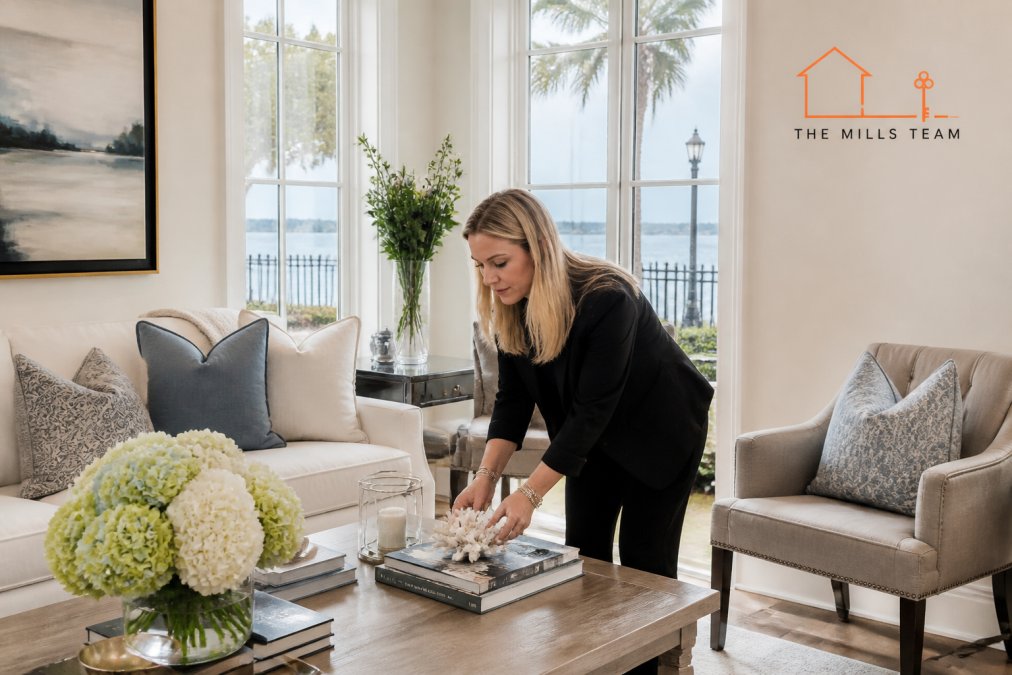
Luxury home staging tips work best when they amplify what already exists rather than disguise it. Buyers at this level are not fooled by tricks, and they are not looking for a blank canvas. They want to feel the lifestyle the home offers.
- The entry, because curb appeal sets the tone
- The primary suite, because it sells the daily experience
- The kitchen and main living space, because that’s where life happens
- Outdoor areas with waterfront access or garden views
Curated Showings and White-Glove Service
Curated showings replace open houses at the luxury tier. Instead of a weekend traffic jam, you get a small number of qualified buyers walking through at scheduled times with their agents. White-glove service means every detail is handled: parking, privacy, timing, and follow-up.
Ask your agent how they qualify buyers before a showing. A curated list of five serious buyers beats fifty casual visitors every time, and it protects your privacy.
Marketing Luxury Real Estate: Beyond the MLS
Marketing luxury real estate requires a reach that goes past the MLS. The MLS is table stakes. The real work happens in premium marketing channels, lifestyle branding, and direct outreach to buyer demographics that actually transact at your price point.
A strong campaign typically includes:
- Professional photography and cinematic video
- A dedicated property website
- Targeted digital advertising to affluent audiences
- Direct outreach to top agents with qualified buyers
- Print placement in luxury lifestyle publications
Off-Market and Pocket Listings for Privacy
Off-market and pocket listings let sellers control who sees the property and when. For public figures, executives, or anyone who values discretion, this approach keeps the listing out of public view while still reaching serious buyers through agent networks. The trade-off is reach, so it works best when paired with a clear timeline and a fallback plan to go public.
Selling Historic Homes in Charleston: Preservation and Provenance
Provenance is not a marketing buzzword at the luxury tier, it is a pricing input. Buyers of historic properties pay for documented lineage, original architectural fabric, and a clear paper trail of stewardship. A home with a well-organized provenance file routinely outperforms a comparable property with no history, because it removes the buyer’s biggest fear: the unknown.
What a Provenance File Should Contain
Before you list, assemble a binder (physical and digital) that includes:
- Chain of title and any recorded easements or covenants
- Original architectural drawings, if they survive, or period-appropriate documentation
- Permits for every renovation, addition, and systems upgrade
- Records of preservation work, including who did it and when
- Photographs of original details, mantels, millwork, heart-pine floors, wrought-iron, before and after restoration
- Any historic designation paperwork or tax-credit documentation
Preservation Guidelines and What Buyers Actually Ask
If the home sits in a locally designated historic district or is individually listed, exterior alterations typically require review before work begins. Buyers at this tier almost always ask four questions, and having answers ready prevents late-stage renegotiation:
- What can and cannot be altered on the exterior?
- Are there easements that restrict future changes?
- What disclosure obligations apply to known preservation issues?
- Are there transferable tax incentives tied to the property?
The Privacy Trade-Off for Landmark Properties
Historic and landmark homes attract attention. That attention is a marketing asset and a privacy liability at the same time. For sellers who are public figures, executives, or simply private, the answer is often a controlled release rather than a public listing from day one.
Ask your agent how they qualify buyers before any private showing. A curated list of five serious, pre-qualified buyers protects both your privacy and your negotiating position far better than an open house ever will.
Documentation as a Negotiation Tool
When provenance is documented, it stops being a story and becomes evidence. That evidence supports your asking price, reduces buyer requests for credits, and shortens the appraisal conversation. Sellers who treat the provenance file as an afterthought often find themselves defending their price instead of justifying it.
Tax Implications and Closing Process for High-Value Sales
High-value sales carry tax and closing mechanics that standard transactions rarely touch. The goal here is not to give tax advice, it is to make sure you walk into your listing appointment with the right questions and the right professionals already in the room.
Tax Questions to Resolve Before You List
Capital gains treatment on a primary residence is governed by federal rules that cap the exclusion amount, which means a high-value sale can produce taxable gain that a typical sale never would. Two mechanisms come up repeatedly:
- Section 1031 exchanges. Available for investment and business-use property, not primary residences. The timeline is strict: you generally must identify replacement property within 45 days of closing and complete the purchase within 180 days. Miss either deadline and the deferral is lost.
- Installment and deferred structures. Some sellers use structured arrangements to spread gain across tax years. These require professional drafting and are not appropriate for every situation.
Do not assume the primary-residence exclusion covers your entire gain. At the luxury tier, the exclusion often covers only a portion of it, and the remainder is taxable. Confirm the math with your tax professional before you set your net-proceeds expectations.
How the Luxury Closing Differs
The closing arc looks familiar, offer, negotiation, escrow, appraisal, final walkthrough, but the volume and complexity change at this level:
- Appraisal risk is higher. Fewer true comparables means appraisers have more discretion, and a low appraisal can reopen price negotiations late in the process.
- More parties, more coordination. Attorneys, tax advisors, wealth managers, relocation consultants, and sometimes trust or entity representatives all need to be aligned on timing.
- Entity and trust ownership. When title is held by an LLC, trust, or partnership, additional documentation and authorization steps are required before closing.
- Contingencies are more customized. Financing, inspection, and sale-of-other-property contingencies are often negotiated in detail rather than accepted as standard.
Protecting Your Timeline
The single most common cause of a stalled luxury closing is a problem discovered late, an inspection issue, a title defect, or an undisclosed restriction. A pre-listing inspection and a title review before you go to market surface those problems while you still control the calendar. Fixing them early costs less than renegotiating them under pressure.
Conclusion
Selling a luxury home in the Charleston market rewards preparation and punishes guesswork. The sellers who win are the ones who price on evidence, stage for the lifestyle, and market beyond the MLS.
Frequently Asked Questions
What defines a luxury property in the Charleston market?
In Charleston, a luxury property typically features high-end finishes, premium locations such as waterfront or historic districts, and often exceeds $1.5 million. Unique architectural details, provenance, and amenities like private docks or gardens also play a role. The Mills Team can provide a personalized valuation based on current market trends and comparable sales.
How does historic preservation impact the sale of high-end homes?
Historic preservation can enhance a luxury home’s value by maintaining its provenance and architectural integrity, but it may also limit renovations. Buyers often pay a premium for well-preserved properties in Charleston’s historic districts. Understanding local preservation guidelines is crucial; The Mills Team has experience navigating these regulations to maximize your sale.
What marketing channels are most effective for luxury listings?
Effective luxury marketing includes professional photography, 3D virtual tours, targeted digital ads, and exclusive broker events. Off-market and pocket listings can also generate interest among qualified buyers. The Mills Team uses a multi-tier marketing system that combines these strategies to reach international buyers and achieve optimal results.
How do you accurately price a unique luxury estate?
Pricing a unique estate requires a detailed market analysis, including comparable sales, current market absorption rate, and property-specific features like waterfront access or historic significance. An appraisal and pre-listing inspection can also inform the listing price. The Mills Team provides agent-prepared valuations to ensure your home is priced competitively.
What role does professional staging play in high-end home sales?
Professional staging highlights your home’s best features, improves curb appeal, and helps buyers envision the lifestyle. For luxury properties, staging with high-end finishes and curated decor can significantly reduce days on market and increase final sale price. The Mills Team offers staging tips and connects you with top local stagers.